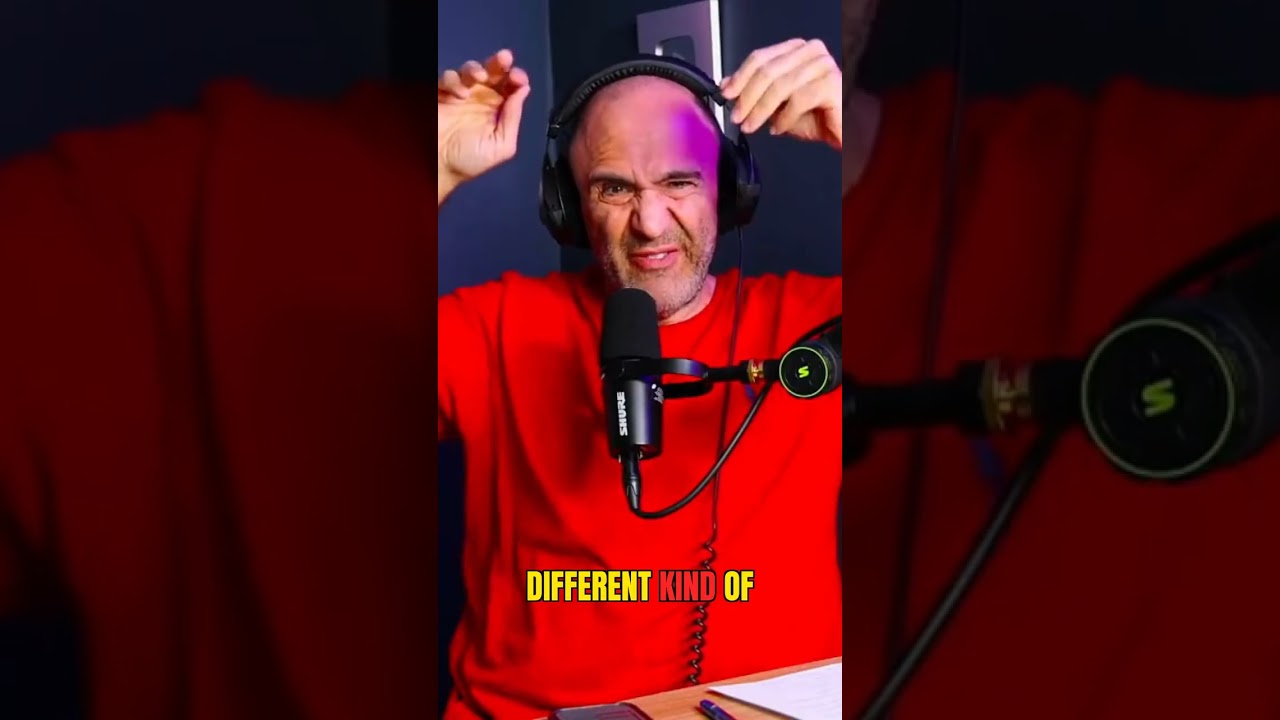
Why Haters Won't Buy: How Personal Bias Kills Sales Even When Your Humor Is Viral
Personal bias completely overrides objective humor and brilliant copywriting in sales. When a customer harbors a deep-seated dislike for you, even a universally praised, viral piece of content will fall flat. Discover why pre-existing resentment creates an unbreakable conversational wall and how to stop wasting your energy on unreachable prospects.
Key Takeaways
- Personal bias and negative history completely override objective humor, preventing even viral jokes from landing.
- Trying to win over hostile prospects is a massive waste of creative energy that could be spent building real rapport.
- Likability acts as the essential delivery system for any sales pitch, value proposition, or punchline.
- Pre-existing resentment creates psychological armor that repels trust before a single product feature is even mentioned.
- Focusing your sales strategy exclusively on receptive audiences drastically improves conversion rates and reduces friction.
The Psychology of Hostility in Sales
Let's address the elephant in the room. Most sales gurus will tell you that a great product sells itself, or that a clever enough headline can pierce through any armor. Absolute garbage. If someone fundamentally despises you—whether you're an annoying internet personality, a polarizing creator, or just a guy who ticked off his next-door neighbor—no amount of rhetorical wizardry is going to save you.
Think about it like this. Comedy and commerce share the exact same biological delivery system: trust. If the receiver of your message has already locked the mental gates against you, your words bounce off like spitballs hitting a titanium shield. You can have the slickest funnel, the highest-converting copy, and a product that literally cures minor inconveniences, but if the buyer looks at you and thinks, "I cannot stand this individual," your goose is cooked.
This is where the delusion of pure meritocracy dies. We desperately want to believe that a good joke or a brilliant product feature stands entirely on its own merits, divorced from the human being delivering it. But human beings are emotional, stubborn, and wonderfully petty creatures. They don't evaluate data in a vacuum. They evaluate data through the funhouse mirror of their feelings about the person presenting it.
The Henry Effect: Why Some People Are Unreachable
Take my neighbor Henry. Henry fucking hates me. He has hated me for years, primarily because I routinely test out my most brutal, unhinged insult humor right in his general direction. It’s a dynamic, sure, but it’s not a warm one. Now, imagine I craft a joke. Not just any joke—a certified, grade-A masterpiece of comedic timing and insult writing. I drop it onto YouTube, and within forty-eight hours, hundreds of thousands of strangers are losing their minds laughing. It goes viral. The algorithms sing my praises.
Do you think Henry cracks a smile? Do you think he walks over to my fence, chuckles, and says, "You know what, Rochman? You got me. That was objectively hilarious"?
Not a chance in hell. Henry's face would remain set in stone, a monument to pure, unadulterated animosity. And that right there is the harsh, beautiful truth about commerce and communication: personal bias overrides objective quality every single time.
The Trap of Trying to Convert the Unconvertible
Most creators and business owners fall into a catastrophic trap. They spend eighty percent of their emotional bandwidth trying to win over the two percent of people who actively despise them. They look at a hostile critic, a cynical forum commenter, or an angry neighbor, and they think, "If I just write the perfect argument, I can change their mind."/>
Stop doing that. It is psychological self-harm. Henry isn't going to buy your product, he isn't going to stream your podcast, and he certainly isn't going to appreciate your genius. When a prospect's baseline emotion toward you is contempt, every value proposition you offer looks like a threat or a scam. Save your breath. Let them hate you in peace while you go find the people who are actually ready to vibe with your wavelength.
Building Rapport as the Ultimate Conversion Tool
If hostility kills conversions, what actually drives them? Rapport. It’s the old-school, painfully obvious truth that modern marketers try to bypass with automated email sequences and flashy retargeting ads: people buy from people they actually like.
Notice I didn't say people buy from people who run the best ads. Sometimes they do, but if they have a choice between two identical products, they are sliding their credit card over to the person who made them feel seen, respected, and slightly amused in a friendly way. Likability lowers the drawbridge. It removes the defensive friction that keeps wallets tightly zipped.
When you prioritize being personable over being a walking insult machine (at least with prospective buyers!), you change the entire thermodynamic equation of the sale. You aren't forcing an entry; you're being invited in. The humor works because they want you to succeed. The offer lands because they trust your intent.
Conclusion: Stop Shouting Into the Void
At the end of the day, you have a finite amount of creative energy. You can spend it trying to force a laugh out of someone who has already decided you're public enemy number one, or you can invest it in building genuine connections with people who are predisposed to appreciate your brand of madness. Be likable, pick your battles, and stop trying to sell ice to someone who would rather melt in the desert just to spite you. Want to dive deeper into the mechanics of charm, sales resistance, and why rapport always beats raw copywriting? Listen to the full episode for the complete breakdown on how being chill gets customers to say yes.
Frequently Asked Questions
Why do viral jokes fail to impress people who dislike you?
Personal bias acts as a psychological filter that distorts objective reality. When someone dislikes you, their brain actively resists finding you funny, smart, or charming, regardless of how much external validation your content receives.
Is it possible to convert a hostile hater into a paying customer?
In most cases, it is an inefficient use of your time and energy. Trying to force a sale with someone who harbors deep-seated resentment usually results in high friction and low conversion, as their baseline distrust overrides any value proposition.
How does likability function as a sales tool?
Likability acts as the delivery system for your message. It lowers the customer's defensive resistance, builds immediate trust, and makes them far more receptive to your offers, humor, and general perspective.
What should I focus on instead of trying to win over critics?
Focus your energy on building genuine rapport with audiences who naturally align with your personality and tone. Prioritizing warm relationships over hostile conversions yields a much higher return on your creative investment.