Crossing the Line: Why Controversy is Good for Creative Growth
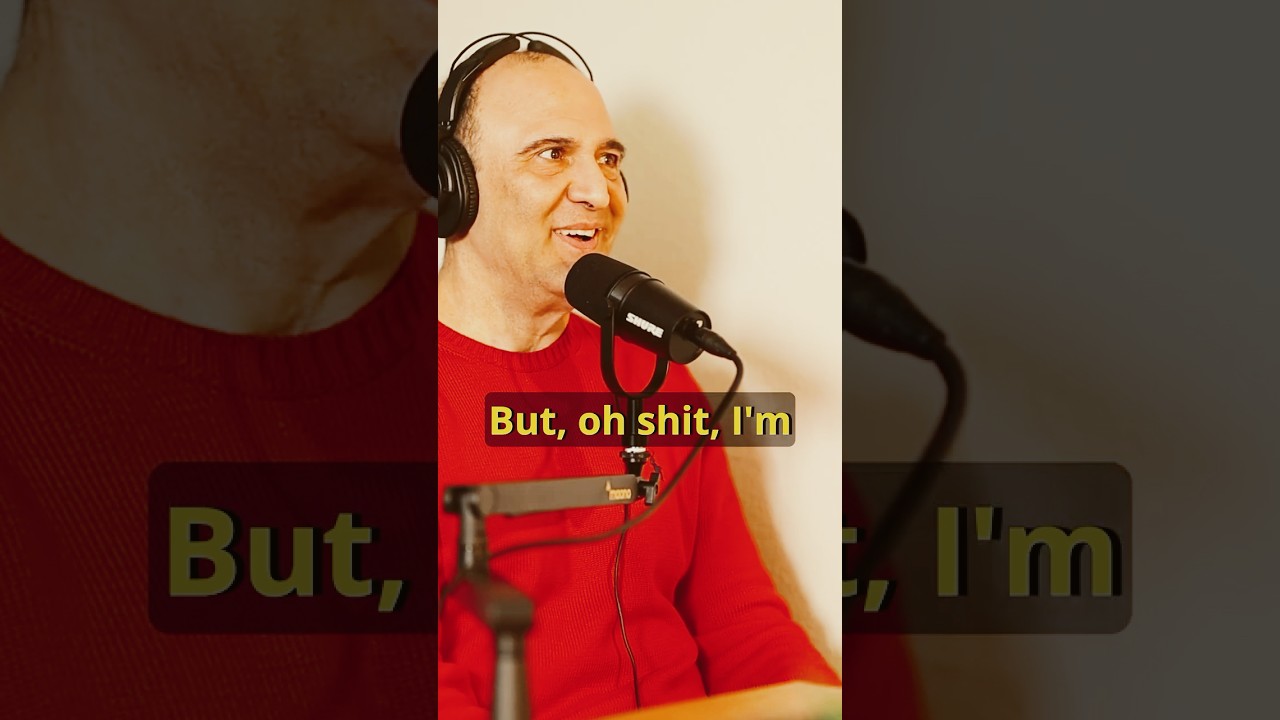
Welcome back, listeners and readers, to another deep dive into the messy, unpredictable world of creativity. If you have been following our journey here, you know we rarely shy away from difficult topics. However, our most recent release managed to touch a nerve in a way we honestly did not anticipate. In this post, we are going to unpack the listener reactions to our most boundary-pushing episode yet, explore why leaning into discomfort is vital, and discuss why stirring the pot is sometimes the only way to spark truly meaningful conversations. Whether you are an artist, a writer, an entrepreneur, or simply someone trying to express your authentic voice in a crowded world, understanding the mechanics of controversy just might be the missing piece in your creative toolkit. Be sure to check out the exact catalyst for this entire discussion by listening to I Started the Chaos: The Genesis Episode That Crossed the Line.
Introduction: Stepping Over the Line
Every creator eventually reaches a crossroads. On one path lies safety, predictability, and universal approval. On the other path lies risk, misunderstanding, and the potential to ruffle feathers. For a long time, many of us are conditioned to take the safe path. We want people to like us. We want our work to be well-received, digestible, and widely consumed without friction. But what happens when you realize that aiming for universal appeal often results in creating something completely forgettable?
Stepping over the line is rarely a comfortable experience. It feels like walking out onto thin ice, listening for the ominous crack beneath your boots. Yet, that exact feeling of vulnerability is often the flashing neon sign telling you that you are finally onto something real. When we produced our latest episode, we knew we were pushing the envelope. We knew we were tackling a subject from an angle that defied conventional wisdom and challenged deeply ingrained assumptions. What we did not fully predict, however, was the sheer volume and intensity of the response. Stepping over the line is not about being provocative for the sake of shock value; it is about refusing to let the fear of other people's disapproval dictate the boundaries of your expression.
Unpacking the Chaos: Listener Reactions to Our Most Daring Episode That Crossed the Line
To say the reaction was polarizing would be an understatement. Within hours of the episode going live, our inbox, social media feeds, and community forum transformed into a digital battlefield. We received messages from listeners who felt validated, liberated, and deeply seen. For these individuals, the episode put words to thoughts they had harbored for years but were too afraid to voice themselves.
On the flip side, we received an equally passionate wave of pushback. Some long-time listeners expressed disappointment, feeling that we had abandoned our previous tone or crossed a moral boundary. There were accusations of sensationalism, tone-deafness, and reckless abandon. Reading through these conflicting viewpoints was a surreal experience. One moment, you feel like a visionary providing a necessary public service; the next moment, you feel like a public enemy.
What fascinated us the most, however, was not the binary nature of the love-it-or-hate-it feedback, but the depth of the conversations it spawned. People were not just leaving passive reviews and moving on; they were writing paragraphs, recording their own audio responses, and debating passionately in the comment sections. The episode acted as a massive mirror, reflecting back the biases, hopes, and anxieties of everyone who engaged with it. It proved a fundamental truth about human psychology: when you step over the line, you force people to define where their own lines are drawn.
Why Comfort is the Enemy of Creative Growth
It is human nature to seek comfort. We build our routines, curate our social circles, and consume media that reinforces our existing worldview. In the creative realm, comfort translates to repeating formulas that have worked in the past. If a specific format, style, or opinion gained you praise last week, the temptation is to replicate it endlessly to secure that same dopamine hit.
However, comfort is the silent killer of creative evolution. When you operate entirely within your comfort zone, your brain goes on autopilot. You stop questioning your premises, you stop experimenting with new techniques, and your work slowly begins to stagnate. True growth requires friction. Just as a muscle must experience microscopic tears and stress during a workout to grow stronger and larger, your creative mind must experience stress and resistance to expand its capacity.
The Danger of Echo Chambers
When creators prioritize comfort above all else, they inevitably build echo chambers. You start tailoring your output exclusively to please the most vocal, sensitive segment of your audience. Before you know it, you are self-censoring before you even put pen to paper or hit the record button. You begin asking yourself, Is this too weird? Will someone be offended? Will I lose subscribers?
This preemptive self-censorship is toxic to authentic creation. It strips your work of its unique fingerprint and turns you into a sterile manufacturer of content rather than an authentic artist. Breaking out of this trap requires actively seeking out discomfort. It means allowing yourself to make mistakes, to look foolish, and to be misunderstood. Without the willingness to be uncomfortable, you will never discover the outer limits of your potential.
Stirring the Pot: The Value of Sparking Meaningful Conversations
There is a massive difference between cheap provocation and meaningful controversy. Cheap provocation is yelling fire in a crowded theater just to watch people run. It has no substance, offers no insight, and leaves behind only chaos and distrust. Meaningful controversy, on the other hand, is introducing a neglected, inconvenient, or taboo truth into a room full of people who are too polite to mention it.
Stirring the pot is an art form. It requires deep understanding of the subject matter, empathy for your audience, and the courage to weather the storm that follows. When you stir the pot, you disrupt the status quo. You shatter the polite silence that allows systemic flaws, outdated traditions, and intellectual laziness to persist.
Think about the most influential movements, artworks, and philosophical breakthroughs in human history. None of them were born out of consensus. Every single one of them ruffled feathers, made people uncomfortable, and was initially met with resistance or outright hostility. Galileo did not revolutionize astronomy by agreeing with everyone in the room. Picasso did not reinvent painting by copying the accepted standards of his day. They stirred the pot. They forced society to look at reality through a different, often jarring lens. By sparking these intense, sometimes uncomfortable dialogues, creators breathe life into communities that might otherwise have died of boredom.
Lessons Learned from Crossing Boundaries
Navigating the aftermath of our most controversial episode taught us invaluable lessons that we want to share with every creator out there. First and foremost, we learned that disapproval is not fatal. When you are in the thick of negative feedback, it can feel like the world is ending. Your heart rate spikes, your defense mechanisms kick in, and you want to delete everything and hide under a rock. But once the initial shock wears off, you realize that the sun still rises, your life goes on, and your core supporters are still right there with you.
Listening Without Defensiveness
Another crucial lesson is the importance of separating constructive criticism from emotional noise. When people are angry, their feedback is often laced with hyperbole and hostility. Sifting through that anger to find the genuine kernel of insight is a difficult but essential skill. Did people object because we were genuinely malicious, or because we challenged a sacred cow that needed challenging? Learning to listen to the pushback without immediately becoming defensive allows you to refine your perspective and grow intellectually.
Finally, we learned that boundary-pushing forces you to gain absolute clarity on your convictions. When everyone agrees with you, you never really have to articulate *why* you believe what you believe. But when a hundred people are challenging your premise, you are forced to dig deep into your philosophy, examine your foundations, and learn how to articulate your thoughts with precision and resilience. Crossing boundaries acts as an intellectual crucible, burning away the superficial fluff and leaving only your truest, most well-tested ideas.
Conclusion: Embracing the Discomfort in Your Own Creative Journey
At the end of the day, creativity is not a popularity contest. If your primary goal is to make sure nobody is ever upset by your work, you will end up producing art that moves no one, challenges no one, and changes nothing. Embracing controversy does not mean being deliberately obnoxious or unkind; it means refusing to let the fear of tension stop you from sharing your authentic vision with the world.
We encourage you to look at your own creative output. Where are you playing it safe? Where are you biting your tongue because you are afraid of what the crowd might say? What is the conversation you know you need to start, even if your hands are shaking as you type or speak? Step over that line. Lean into the discomfort. The chaos that follows might just be the exact catalyst you need to unlock your next level of growth. To hear the full story of how we navigated this turbulent experience and started the fire that changed everything, make sure you listen to I Started the Chaos: The Genesis Episode That Crossed the Line. Until next time, stay bold, keep creating, and never be afraid to stir the pot.